
Used Desk for Sale from Ufficio Furniture

Updated: Aug 18
A used desk can be one of the smartest furniture purchases you make, if you know what to look for before you buy. The right one gives you a solid work surface, dependable storage, and a better layout without the price of buying new.
Buying secondhand also comes with questions. Is the frame still sturdy? Will the finish hold up? Does the size fit the room? Can it be moved without damage? When looking at a used desk for sale from Ufficio Furniture, the goal is to judge more than appearance. A good desk should fit the space, support daily use, and arrive with no surprises.
This guide walks through how to evaluate a used desk, what questions to ask, which features matter most, and how to decide whether a listing is truly worth it.

Why buying a used desk makes sense
A quality desk often has a lot of life left after its first owner is done with it. Many commercial-grade desks are built with stronger frames, thicker surfaces, and better hardware than low-cost new options. That makes used furniture worth a close look, especially when the desk comes from a seller focused on workplace furniture.
The main benefits are practical.
Lower cost is the obvious one. Used desks often sell for less than comparable new pieces, which can free up budget for seating, lighting, storage, or delivery.
Better construction can also be a major advantage. Older or commercial furniture may include steel frames, durable laminate tops, solid drawer slides, cable ports, and modular parts.
Faster availability matters when a space needs to be furnished soon. New furniture can involve production and shipping delays. Used inventory is usually already made and ready for inspection or scheduling.
Less waste is another clear win. Reusing a desk keeps materials in service longer and can reduce the need for new manufacturing.
A used desk is not automatically a bargain, though. Its value depends on condition, size, design, and how well it supports the work done on it.
Start with the way the desk will be used
Before comparing finishes and prices, define the desk’s job. A desk for a laptop and notebook has different needs than one used for dual monitors, drafting, shipping supplies, or shared work.
Ask a few simple questions:
How much surface space is needed every day?
Will the desk hold one monitor, two monitors, or heavier equipment?
Is drawer storage necessary?
Does the room need a straight desk, L-shaped desk, corner desk, or sit-stand option?
Will cords need to pass through the top or back?
Does the desk need to match other furniture?
A desk that is too small becomes frustrating fast. A desk that is too large can make a room feel cramped and harder to move through. The best choice leaves enough room for a chair, walking space, power access, and any storage nearby.
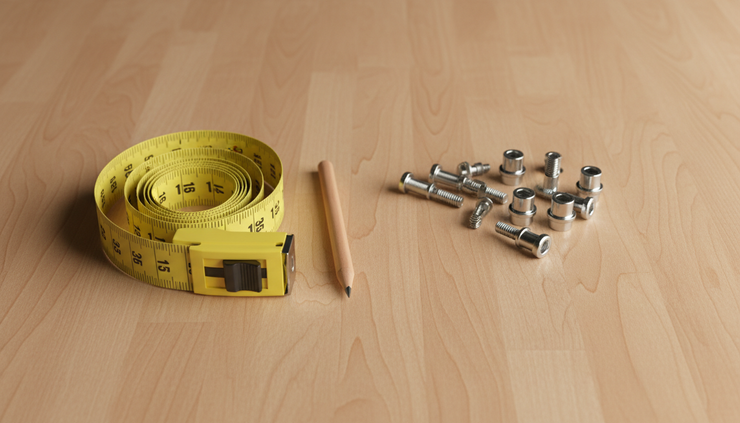
For most rooms, it helps to measure the space before shopping. Mark the floor with painter’s tape to see the footprint. Then check whether drawers, doors, and chair movement will still work.
What to inspect before buying a used desk
A used desk should be judged from the top down and from the inside out. Cosmetic wear may be acceptable. Structural problems are a bigger concern.
Check the desktop surface
Look for deep scratches, bubbling laminate, swelling, cracks, soft spots, and stains. Small scuffs can be normal on used furniture. Worn edges and chipped corners are more important because they tend to get worse with daily use.
Run a hand across the top if inspecting in person. The surface should feel even, not warped or rippled. If the desktop has veneer or laminate, check whether the top layer is lifting.
A good surface does not have to look perfect. It does need to be stable, cleanable, and comfortable to use.
Test the frame and legs
The frame carries the load. Shake the desk gently from side to side. It should not wobble, creak heavily, or rock on level ground.
Check for:
Loose fasteners
Bent legs
Rust on metal parts
Cracks around joints
Missing leveling feet
Signs of poor repairs
Some wobble can come from uneven flooring, but unstable construction is different. If the frame moves independently from the desktop, the desk may need tightening or replacement parts.
Open every drawer
If the desk includes storage, test each drawer fully. Drawers should open and close without grinding, sticking, or dropping. Inspect the rails, handles, locks, and interior panels.
Look inside for water marks, odour, broken dividers, or cracked drawer bottoms. A drawer that looks fine from the outside may be weak underneath.
If keys are included for lockable drawers, test them. If keys are missing, decide whether that matters before purchase.

Look at cable access
Many desks include grommets, back cutouts, modesty panels, or cable trays. These features can make a used desk easier to live with.
Check whether holes are placed where they will actually help. A cable port on the wrong side may not be useful if the outlet is on the opposite wall. Also check for sharp edges or broken plastic inserts.
If the desk has power modules, be cautious. Used electrical parts should be inspected carefully. When in doubt, use a separate surge protector or have a qualified person review built-in components.
Size matters more than style
A desk can look great and still be wrong for the room. Size affects posture, comfort, storage, and traffic flow.
Common desk depths often fall around the range needed for a monitor, keyboard, and writing space. A shallower surface can work for laptop use, while a deeper one gives more room for screens and accessories. Width matters even more if the desk needs to support multiple devices or paperwork.
Height is another key point. Many fixed desks are made around standard seated desk height, but comfort still depends on the chair, user height, and keyboard position. If the desk feels too high, shoulders may rise. If it feels too low, wrists and knees can feel cramped.
When reviewing a listing, confirm:
Overall width
Overall depth
Desktop height
Knee clearance
Drawer pedestal width
Return dimensions for L-shaped desks
Disassembly options for transport
Measure doorways, hallways, stairways, and elevators too. A large desk is only useful if it can reach the room.
Materials tell you what kind of life the desk has left
Used desks come in several common materials. Each has strengths and tradeoffs.
Material | What to like | What to watch |
Laminate over particleboard or MDF | Easy to clean, common, often affordable | Swelling, chipped corners, lifted edges |
Wood veneer | Warmer look, often lighter than solid wood | Scratches, peeling veneer, water marks |
Solid wood | Durable, repairable, long service life | Weight, cracks, higher cost |
Metal frame with composite top | Strong support, modern look, stable | Rust, missing hardware, bent parts |
Glass top | Clean appearance, easy to wipe | Chips, weight limits, fingerprints |
Laminate can be a smart choice for heavy daily use because it wipes clean and resists many surface marks. Solid wood can be repaired more easily, but it may need more care. Metal frames are useful for strength and stability, especially on larger pieces.
The key is matching the material to the job. A desk used for crafts, tools, or shipping supplies needs a tougher surface than one used mainly for a laptop.
Ask the right questions before committing
A clear listing is helpful, but it does not replace direct questions. Before buying, gather enough information to avoid guessing.
Good questions include:
What are the exact dimensions?
Are there any chips, dents, stains, or repairs?
Are all drawers and hardware working?
Does the desk come assembled or disassembled?
Are any parts missing?
Is delivery available?
What is the return or exchange policy, if any?
Can additional photos be provided?
Are multiple matching desks available?
If you are comparing several used desks, keep notes. Photos can blur together, especially when finishes and layouts look similar.
A reliable seller should be willing to describe the condition clearly. Used furniture does not need to be flawless, but the condition should be transparent.
Think through pickup, delivery, and setup
Getting a desk into place can be the hardest part of the purchase. Many desks are heavier than they look, especially those with pedestal drawers, metal frames, or thick tops.
Before arranging pickup or delivery, confirm whether the desk can be taken apart. Some desks have removable legs or returns. Others are glued, fixed, or difficult to move without damage.
Plan for:
Vehicle space
Check the longest dimension of the desk and compare it with the cargo area. A truck or van may be needed.
Help lifting
Even a medium-size desk can be awkward. Two people usually make moving safer and reduce the chance of dents.
Protection
Use moving blankets, straps, and corner protection. Avoid dragging the desk across pavement or floors.
Pathway clearance
Measure more than the room. Check door openings, tight turns, stairwells, and landing spaces.
Assembly tools
Ask which tools are needed if the desk is delivered in parts. Keep screws and brackets organized during the move.
A used desk that costs less upfront can become frustrating if transport is not planned. Setup should be part of the buying decision, not an afterthought.
How to tell if the price is fair
A fair used desk price reflects condition, brand, materials, size, features, and local availability. Without knowing the original retail price, you can still make a reasonable judgment.
Compare the desk to similar used listings, not just new furniture. A desk with excellent construction, clean condition, and useful storage may justify a higher price than a newer but weaker option.
Look for value in features you will actually use:
Sturdy frame
Clean surface
Smooth drawers
Cable management
Matching storage
Adjustable feet
Modular design
Comfortable dimensions
Do not pay extra for features that do not matter to the room. A large executive-style desk may look impressive, but it is poor value if it blocks movement or creates unused surface space.
A low price can still be a bad deal if the desk needs major repair, has a strong odor, or cannot be moved safely.
Where Ufficio Furniture fits into the search
A furniture-focused seller can make the process easier than buying from an unknown individual. When browsing used inventory from Ufficio Furniture, look for clear photos, complete measurements, condition notes, and practical details about pickup or delivery.
If the listing does not answer a key question, ask before making a decision. Used furniture can vary from piece to piece, even when two desks look similar. One may have better hardware. Another may have cleaner edges or a more stable frame.
The best approach is to treat each desk as its own purchase. Judge the one in front of you, not only the model, brand, or finish.
Match the desk to the rest of the room
A used desk does not need to match everything perfectly. It does need to feel intentional.
Start with finish and shape. A dark wood desk can make a room feel grounded, while a light top often feels cleaner and less heavy. A metal frame can look simple and modern. A traditional pedestal desk adds storage but uses more visual space.
Then think about the chair. The chair should slide under the work surface without hitting drawers or support bars. If armrests collide with the desktop, the setup may feel cramped.
Lighting also matters. A large desk placed away from natural light may need a task lamp. A glossy surface near a bright window may create glare.
Storage nearby can reduce the need for a larger desk. A compact desk with a separate file cabinet or shelf may work better than one oversized piece.

Red flags that should make you pause
Some wear is normal. Certain signs deserve caution.
Avoid or question a used desk if you notice:
Strong musty, smoke, or chemical odor
Warped top or visible water damage
Drawer boxes that sag or separate
Missing structural hardware
Wobble that cannot be corrected
Rust that affects support
Cracked frame joints
Peeling laminate across large areas
Unclear measurements
Photos that hide corners or the underside
A desk can often be cleaned, touched up, or tightened. Major structural damage is different. Repairs can cost more time and effort than the savings are worth.
A simple checklist before buying
Use this quick checklist before saying yes.
The dimensions fit the room and the path into it.
The surface is clean, flat, and usable.
The frame feels solid.
Drawers and hardware work properly.
Wear is cosmetic, not structural.
The price makes sense for the condition.
Pickup or delivery is clear.
The desk supports the way it will be used.
Any missing parts or flaws are acceptable.
The return or final sale terms are understood.
If a desk passes these points, it is much more likely to be a useful purchase.
The best used desk is the one that works every day
A used desk should make the space easier to use, not just fill an empty wall. Look past the first impression and check the details that affect daily comfort: size, stability, surface condition, storage, and move-in logistics.
Ufficio Furniture can be a practical place to look when the goal is solid furniture with life left in it. Focus on condition, ask clear questions, and measure before buying. A well-chosen used desk can serve for years, often at a much better value than buying new.
Ufficio Furniture-Your Office Furniture Solution!
Our Address: 1215 Meyerside Drive, Unit 7 Mississauga, ON L5T 1H3
Contact:
Call us at:
Store Number: 905-795-2506(10am-7pm)
#1) [647-898-8918]
#2) [647-955-1206]
For more furniture: www.ufficiofurniture.com
Business Hour:
MONDAY: 10am-7pm
TUESDAY: 10am-7pm
WEDNESDAY: 10am-7pm
THURSDAY: 10am-7pm
FRIDAY: 10am-7pm
SATURDAY: 10am-7pm
SUNDAY: 11am-6pm
No appointments required. Just walk in during the business hours Mississauga.
Same day or next day delivery available.


Comments