
Used Cabinets for Sale from Ufficio Furniture
- office furniture

- Aug 15
- 8 min read
Updated: 6 days ago
Storage is one of those upgrades people notice only when it is missing. Loose supplies pile up, files get shoved into boxes, tools wander from room to room, and every surface starts doing the job of a cabinet.
That is why used cabinets can be such a smart buy. A well-built cabinet still has plenty of life left after its first owner. If the frame is solid, the drawers glide, and the doors close cleanly, buying pre-owned can deliver dependable storage without paying for brand-new furniture.
Used cabinets for sale from Ufficio Furniture can be a practical fit for workplaces, home studios, classrooms, garages, stockrooms, and shared spaces that need organized storage at a better value. The key is knowing what to look for before you buy, how to match cabinets to the space, and how to judge condition without getting distracted by small cosmetic marks.

Why used cabinets are worth considering
Used cabinets are not just a budget choice. In many cases, they are a better practical choice.
New cabinetry can involve long ordering times, limited availability, and higher costs for features that may not matter in daily use. Used cabinets are often ready to inspect, ready to measure, and ready to put back into service. That matters when storage is needed now, not months from now.
The biggest advantage is value. A quality cabinet can remain useful for years if it has a strong frame and working hardware. Pre-owned cabinets often come from businesses, institutions, or facilities that changed layouts, downsized, or replaced furniture during a remodel. The cabinet may show light wear, but the function can still be excellent.
Used cabinets also offer more flexibility. Instead of committing to a full matched set, you can often mix cabinet types based on actual need. A tall cabinet can handle bulk supplies. A lateral file can store documents and flat items. A low cabinet can fit under a window or along a wall where height matters.
There is also a sustainability benefit. Reusing furniture keeps usable materials out of the waste stream and reduces demand for newly manufactured goods. For many buyers, that is a practical way to make a more responsible purchase without sacrificing function.
The cabinet styles commonly worth shopping for
Not every cabinet solves the same problem. Before comparing finishes or colors, start with the type of storage you need.
Tall storage cabinets
Tall cabinets are ideal when floor space is limited but vertical wall space is open. They work well for supplies, binders, cleaning products, equipment, seasonal items, and boxed inventory.
Look for adjustable shelves if the items being stored vary in size. Fixed shelves are fine for predictable storage, but adjustable ones make the cabinet useful in more situations.
Lateral file cabinets
Lateral file cabinets are wider than standard vertical filing cabinets. They are useful when documents need to be accessed often, especially letter-size and legal-size files.
They can also store more than paper. Many people use them for art prints, samples, manuals, parts, electronics, and flat materials. A sturdy lateral file cabinet can handle heavy contents, but the drawers should open smoothly and resist tipping when loaded.
Vertical file cabinets
Vertical file cabinets are narrow and deep. They work well in tight spaces where wall width is limited. They are a familiar choice for paper records and personal documents.
When buying used, check the drawer rails carefully. A vertical file cabinet with a sticking drawer can become frustrating fast, especially if it will be opened several times a day.
Credenzas and low cabinets
Low cabinets work well where storage needs to stay visually quiet. They can sit under windows, along hallways, inside multipurpose rooms, or behind counters.
Some low cabinets include sliding doors, hinged doors, drawers, or a mix of both. The right choice depends on how often items will be accessed and how much clearance is available in front of the unit.
Specialty cabinets
Some used cabinets are built for specific tasks. These may include wardrobe cabinets, supply cabinets, flammable storage cabinets, mailroom-style units, drawer stacks, or heavy-duty shop cabinets.
Specialty pieces can be excellent buys, but only when the use case is clear. A cabinet designed for one purpose may not adapt well to another.

How to inspect a used cabinet before buying
Condition matters more than age. A ten-year-old commercial cabinet in good shape may outperform a newer cabinet made with weaker materials.
Start with the frame. The cabinet should sit level, with no obvious twisting or warping. Doors should line up evenly. Drawers should sit straight in their tracks. A slightly scratched side panel is usually cosmetic. A bent frame is a bigger issue.
Next, check movement. Open and close every drawer and door if possible. Listen for grinding, scraping, or uneven resistance. Drawer glides should feel controlled rather than loose. Hinges should hold doors without sagging.
Check shelves and shelf pins. Shelves should not bow under normal weight. Missing pegs or clips may be easy to replace, but it is still better to factor that into the decision.
For locking cabinets, ask whether keys are included. If keys are missing, the lock may still be replaceable, but that adds time and cost. If secure storage is a priority, confirm that the lock works before purchase.
Inspect the surfaces last. Scratches, small dents, scuffs, and worn corners are common in used furniture. Decide what matters for the cabinet’s future location. A few marks may be fine in a storage area. They may matter more in a customer-facing space.
A useful inspection checklist includes:
Frame stability
The cabinet should not rock, twist, or lean.
Door and drawer alignment
Moving parts should open cleanly and close flush.
Hardware condition
Hinges, pulls, glides, and locks should be secure.
Shelf support
Shelves should sit level and feel strong.
Surface wear
Cosmetic damage should match the intended use.
How to choose the right size and layout
A cabinet that looks good in a listing can still be wrong for the room. Measurements prevent expensive mistakes.
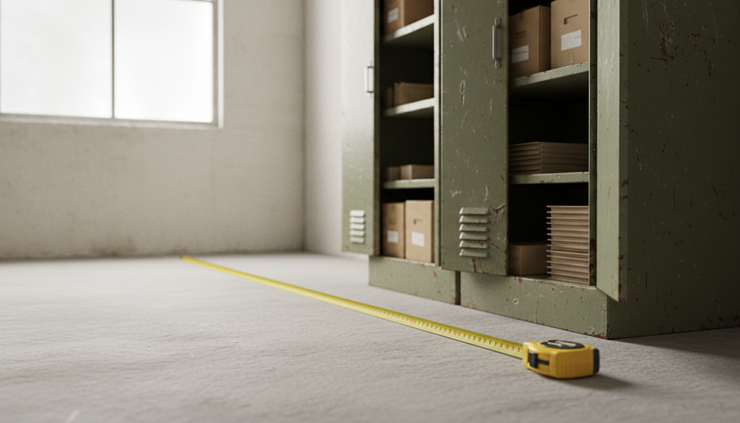
Measure the space before shopping. Include wall width, ceiling height, baseboards, doorways, hallway turns, elevators, and staircases. A cabinet must fit not only where it will live, but also through every path required to get it there.
Think about clearance. Hinged doors need room to swing open. File drawers need space to extend fully. Sliding doors can help in tighter areas because they do not project into the walkway.
Also plan for what goes inside. Storage fails when the cabinet is too shallow, too narrow, or poorly divided for the actual contents. Before buying, group items by size and access frequency.
Items used every day should sit between waist and shoulder height when possible. Heavy items belong low. Rarely used items can go higher. This simple approach makes the cabinet safer and easier to use.
The finish matters too, but it should serve the space. Neutral laminate, painted metal, and wood veneer can all work, depending on the setting. If matching existing furniture is important, bring photos and measurements. Exact color matches can be hard with used furniture, but a close visual fit may be enough.
Where used cabinets make the most sense
Used cabinets are especially useful in spaces where function matters as much as appearance.
A storage room can benefit from tall shelving cabinets with doors that hide supplies and reduce visual clutter. A classroom may need low cabinets for materials and lockable units for equipment. A garage or workshop may need durable metal cabinets that can handle tools, containers, and spare parts.
Small businesses often use used cabinets in back rooms, break areas, supply closets, records rooms, and shipping spaces. Residential buyers may use them in basements, hobby rooms, laundry areas, mudrooms, and home storage zones.
The best use cases have three things in common:
The storage need is clear.
The cabinet does not need to be a perfect showroom piece.
Durability matters more than novelty.
That is where used furniture often shines. It provides structure, order, and useful capacity without making the project more expensive than it needs to be.
How Ufficio Furniture can fit into the buying process
Buying used cabinets is easier when the seller understands commercial furniture, storage needs, and condition differences. A cabinet is not just a box with doors. Its value depends on build quality, dimensions, material, hardware, and usability.
Ufficio Furniture can be a helpful source for buyers looking for pre-owned storage options because used furniture inventory often gives shoppers access to different sizes, styles, and configurations. Since used inventory can change, it makes sense to ask what is currently available and what may be coming in soon.
When contacting a furniture seller, have a few details ready:
The approximate dimensions of the space
The type of items being stored
Whether locks are required
Preferred material or finish
Quantity needed
Delivery or pickup needs
Any access limits, such as stairs or narrow doors
These details make it easier to match available cabinets to the real situation. They also help avoid overbuying or choosing a piece that looks right but fails in daily use.
If multiple cabinets are needed, ask whether matching or similar units are available. A perfect match may not always be possible with used furniture, but a consistent height, color family, or material can create a clean look.
What to expect with used cabinet condition
Used cabinets are usually sold with some level of wear. That is normal. The goal is not perfection. The goal is dependable function at a fair value.
Cosmetic wear may include:
Light scratches
Small dents
Edge wear
Fading or finish variation
Marks from previous labels or hardware
Functional issues deserve closer attention. Watch for drawers that jam, doors that will not close, broken glides, missing shelves, cracked panels, heavy rust, or cabinets that do not sit square. Some issues are easy to fix. Others are not worth the trouble unless the price reflects the repair.
For metal cabinets, check for rust near the base and corners. Light surface rust may be manageable in a utility space, but heavy rust can weaken the cabinet and stain floors or stored items.
For laminate cabinets, look at edges and seams. Chipped corners may be cosmetic, while swollen boards can signal moisture damage.
For wood veneer cabinets, inspect peeling, deep gouges, and loose panels. Some wear can give the piece character, but structural problems should be avoided.
Delivery, placement, and setup tips
A cabinet purchase is not finished until the piece is placed safely and ready to use.
Before delivery or pickup, clear the path. Measure doors, corners, and elevators. Remove obstacles. If the cabinet is heavy, plan for the right equipment and enough help.
Once placed, check level and stability. Some cabinets may need glides adjusted or shims added, especially on uneven floors. Tall cabinets should be placed where they will not block vents, outlets, light switches, or walkways.
For safety, avoid loading heavy items high up. Put weight near the bottom, particularly in tall cabinets. File cabinets should be loaded from the bottom drawer upward to reduce tipping risk. If a cabinet is tall or top-heavy, anchoring may be appropriate depending on the location and use.
Clean the cabinet before filling it. Wipe interior shelves, drawers, handles, and exterior panels. Mild soap and water work for many surfaces, but avoid soaking particleboard, laminate seams, or wood veneer.

The smartest way to buy used cabinets
The best used cabinet purchase starts with a clear purpose. Know what the cabinet must hold, where it will go, how often it will be used, and what condition is acceptable.
Then inspect the basics: frame, drawers, doors, shelves, and hardware. Treat cosmetic wear as part of the value equation, not an automatic problem. A scratched cabinet that works perfectly may be a better buy than a cleaner-looking one with weak glides or a warped frame.
Used cabinets can bring order to a space quickly and affordably. With the right measurements and a careful inspection, a pre-owned cabinet from Ufficio Furniture can become one of the most useful pieces in the room.
Ufficio Furniture-Your Office Furniture Solution!
Our Address: 1215 Meyerside Drive, Unit 7 Mississauga, ON L5T 1H3
Contact:
Call us at:
Store Number: 905-795-2506(10am-7pm)
#1) [647-898-8918]
#2) [647-955-1206]
For more furniture: www.ufficiofurniture.com
Business Hour:
MONDAY: 10am-7pm
TUESDAY: 10am-7pm
WEDNESDAY: 10am-7pm
THURSDAY: 10am-7pm
FRIDAY: 10am-7pm
SATURDAY: 10am-7pm
SUNDAY: 11am-6pm
No appointments required. Just walk in during the business hours Mississauga.
Same day or next day delivery available.


Comments