
Where to Find Quality Used Office Furniture for Sale

Updated: 5 days ago
Good office furniture is expensive when bought new, and cheap furniture often shows its weaknesses fast. Chairs lose support, laminate peels, drawers stick, and workstations that looked fine online can feel flimsy after a few months.
That is why the used market is worth a serious look. A well-made chair, cabinet, conference table, or workstation can last for years after its first owner no longer needs it. Companies move, resize, remodel, or close locations all the time. Their furniture often enters the resale market in bulk, and much of it still has plenty of life left.
The key is knowing where to look and how to separate a smart buy from a future headache. Quality used office furniture for sale is not limited to dusty warehouses or random online listings. It can come from professional liquidators, commercial refurbishers, local surplus programs, auctions, and specialty dealers that inspect inventory before selling it.

Start with local used furniture dealers
Local used furniture dealers are often the easiest place to begin. Many specialize in commercial-grade pieces rather than residential furniture. That means the inventory may include task chairs, storage cabinets, reception seating, tables, workstations, cubicles, and filing systems made for daily use.
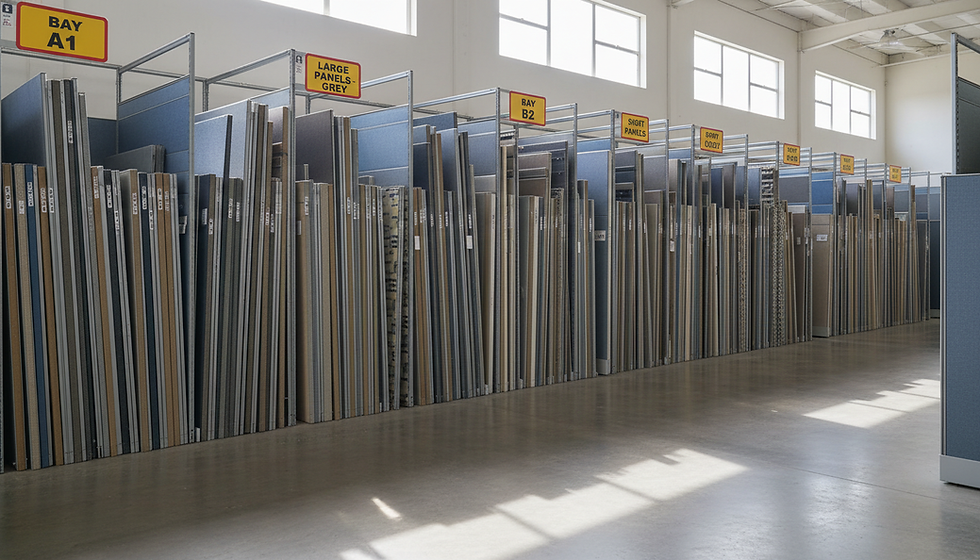
A good dealer does more than stack inventory in a warehouse. They sort, clean, inspect, and sometimes repair items before selling them. Some also offer delivery, installation, space planning, and help matching pieces from the same product line.
That can save time if the goal is to furnish more than one room or match multiple seats, tables, or storage pieces.
Look for dealers that clearly describe:
Condition
New, like new, gently used, refurbished, as-is, or scratch-and-dent should mean something specific.
Quantity available
This matters if matching furniture is important.
Brand and model
Commercial brands are easier to research and find replacement parts for.
Return or exchange policy
Used furniture is often sold as-is, but some sellers offer short return windows or store credit.
Delivery options
Large furniture gets difficult fast without the right vehicle and crew.
Local dealers also let buyers see pieces in person. That is a major advantage because photos rarely show wobble, odors, worn casters, weak drawer slides, fabric stains, or fading.
When visiting a showroom or warehouse, bring a tape measure, photos of the space, and a list of must-have sizes. If buying seating, actually sit in the chair for several minutes. Adjust the arms, seat height, tilt, and lumbar support. A chair that looks clean but cannot adjust properly is not a great deal.
Check commercial furniture liquidators and refurbishers
Furniture liquidators handle inventory from companies that are relocating, downsizing, redesigning, or closing. Because they often buy in bulk, they may have dozens or hundreds of matching pieces available at once.
This is where the used market can be especially strong. A company may replace an entire floor of high-quality furniture simply because the color, layout, or brand standard changed. The outgoing furniture might still be structurally sound.
Commercial refurbishers go a step further. They may replace chair cylinders, reupholster panels, repaint metal parts, repair case goods, or clean surfaces before resale. Refurbished furniture usually costs more than as-is inventory, but it can be worth it when appearance and reliability matter.
Here is a simple way to compare common seller types.
Seller type | Best for | What to watch |
Local used furniture dealer | Small to mid-size purchases, quick pickup, in-person inspection | Inventory changes often, so matching sets may disappear |
Commercial liquidator | Bulk purchases, brand-name items, larger projects | Some pieces may be sold as-is with limited support |
Refurbisher | Cleaner appearance, repaired seating, refreshed finishes | Higher cost than raw used inventory |
Online marketplace seller | One-off finds, low prices, nearby pickup | Quality varies widely, and returns are rare |
Auction site | Bulk lots, unusual finds, low starting bids | Extra fees, pickup deadlines, and limited inspection |
Liquidators and refurbishers are also useful for finding systems furniture, storage walls, modular tables, and other items that are harder to buy from individual sellers.
Ask where the inventory came from in general terms. A seller may not share private client details, but they can often say whether the pieces came from a corporate relocation, showroom closeout, lease return, or warehouse overstock.
That background helps frame expectations. Furniture from a lightly used training room may be in different condition than furniture from a high-traffic call center.

Search online marketplaces with a stricter filter
Online marketplaces can be hit or miss, but they can produce excellent finds. The main advantage is volume. The main risk is inconsistency.
Individual sellers may not know the brand, model, age, or original cost of an item. Photos may be poor. Measurements may be missing. Some listings use broad terms like “executive chair” or “office cabinet” without details.
That does not mean they should be ignored. It means the search needs a stricter process.
Use specific search terms rather than only broad ones. Search by item type, brand, material, and size when possible. Examples include:
Lateral file cabinet
Laminate training table
Mobile pedestal cabinet
Guest chair set
Commercial-grade storage cabinet
Height-adjustable table base
Conference table used
Save searches and check often. Good pieces at fair prices can sell quickly, especially in larger metro areas.
Before contacting a seller, look closely at photos for signs of wear:
Flattened or torn seat cushions
Missing adjustment levers
Cracked plastic arms or bases
Rust on metal frames
Swollen particleboard edges
Chipped laminate corners
Uneven gaps around drawers
Discoloration from sun exposure
Ask for extra photos before driving across town. Request close-ups of labels, underside hardware, drawer interiors, chair bases, and any damage. For seating, ask if all adjustments work. For storage, ask if keys are included.
When buying from a private seller, assume the sale is final. Test everything before paying. Open drawers. Roll chairs. Check table stability. Smell fabric pieces for smoke, mildew, or strong cleaners. A low price is not helpful if the furniture brings problems into the space.
Look at auctions, surplus sales, and closeout sources
Auctions and surplus sales can be some of the most affordable sources, especially for bulk items. They can also be the least forgiving. The rules are usually strict, and the buyer often handles pickup, loading, and timing.
Common sources include:
Business liquidation auctions
University or government surplus programs
Warehouse closeouts
Hotel, school, or institutional surplus
Bankruptcy and asset sales
Dealer clearance events
These channels can be useful for storage furniture, stacking chairs, tables, shelving, and large matching quantities. They may also offer unusual items that standard furniture dealers do not carry.
Before bidding, read the full terms. Some auctions charge buyer premiums, sales tax, loading fees, or storage fees after a pickup deadline. Those extra costs can change the real price.
Do not bid based only on the first photo. Auction lots often include multiple pieces, and the condition can vary. If inspection is available, use it. If not, bid conservatively.
Surplus sales can be more predictable. Universities, municipalities, and large organizations often rotate out furniture on a schedule. Items may not be perfect, but prices can be fair. The tradeoff is usually limited service. Buyers may need to pick up during a narrow time window and bring their own help.
Closeout sources are different from traditional used items. A dealer or manufacturer may sell discontinued, returned, or overstock furniture at a discount. Some pieces may be unused but no longer in current production. This can be a strong option when appearance matters and the budget does not allow full retail pricing.

Know what quality looks like before buying
Finding sellers is only half the work. The bigger skill is judging the furniture itself.
Commercial-grade furniture is built differently from many low-cost home office pieces. It usually has stronger frames, better hardware, replaceable parts, and finishes made for frequent use. When bought used, those qualities matter.
Check chairs with extra care
Chairs are the most personal furniture purchase. A chair can look fine and still be uncomfortable or worn out.
Test these points:
Seat height adjusts smoothly
Tilt and recline functions work
Casters roll without grinding
Armrests are stable
Seat cushion still has support
Backrest does not wobble
Fabric or mesh has no major tears
Base has no cracks
Gas cylinder does not sink after sitting
If several people will use the chairs, adjustability matters more than style. Chairs with adjustable arms, lumbar support, seat depth, and tilt control fit more users.
Replacement parts may be available for well-known commercial brands, which can make a used chair a better long-term value.
Inspect tables, cabinets, and case goods
For tables and storage pieces, structure matters more than surface marks. Small scratches can be acceptable. Swelling, warping, and loose joints are more serious.
Check these areas:
Table legs and bases are tight
Tops do not sag or bow
Laminate edges are not peeling
Drawers slide cleanly
Cabinet locks work if needed
Hinges are aligned
Shelves are not bent
Leveling glides are present
Hardware is not missing
Measure everything. Furniture that is “about six feet” may not fit a specific wall, elevator, doorway, or vehicle. For larger pieces, confirm the path from pickup to final placement. Stairs, narrow halls, and low ceilings can turn a bargain into a problem.
Pay attention to finish and smell
Used furniture carries history. Some of that history is visible, and some is not.
Fabric can hold odors from smoke, pets, moisture, food, or heavy cleaning products. Wood and laminate can hide water damage along edges and underneath panels. Metal can rust at the base or inside drawers.
A clean appearance is good, but smell and touch tell more. Run a hand along edges. Check undersides. Open closed compartments. Look inside drawers with a flashlight.
When buying upholstered items, ask whether the seller cleans them before sale. For large purchases, a professional cleaning may be worth budgeting for.
Plan Your Purchase & Save More with Used Office Furniture
The lowest sticker price is not always the lowest total cost. Used furniture can still require delivery, assembly, repair, cleaning, and disposal of old items.
Before buying, add up the full picture:
Purchase price
Sales tax
Delivery or truck rental
Loading help
Installation
Replacement keys or parts
Cleaning
Repairs
Disposal of unwanted furniture
A $75 cabinet may stop looking cheap if it needs a rented truck, two helpers, and new drawer hardware. By contrast, a higher-priced item from a dealer with delivery included may be the better deal.
Timing also matters. If furnishing a full space, buy core pieces first. Seating, work surfaces, storage, and shared tables should come before decorative extras. Matching every item is less important than creating a clean, functional layout.
For larger purchases, ask the seller to tag or hold inventory in writing after payment. Used inventory moves quickly. Clear paperwork should list quantities, condition, delivery details, and any return terms.
If buying nationwide, pay extra attention to freight. Used furniture is bulky, and shipping costs can be high. Freight delivery may mean curbside drop-off rather than inside placement. Ask whether items are blanket wrapped, palletized, boxed, or delivered by a furniture carrier. Damage claims are easier when expectations are documented before the shipment leaves.

Choose the source that fits the job
The best place to buy depends on the size of the purchase, the need for matching pieces, and the amount of risk that is acceptable.
For one or two items, online marketplaces and local dealers may be enough. For a full workspace or a larger refresh, commercial dealers, liquidators, and refurbishers usually offer better consistency. For bargain hunting and bulk lots, auctions and surplus sales can work well if pickup and inspection are manageable.
Focus on three things: condition, fit, and total cost. A piece that checks all three is usually a smart buy. A piece that fails one of them should be easy to walk away from, no matter how low the price looks.
Used furniture rewards patience. Inventory changes often, and the best finds are not always available on the first search. Keep measurements handy, know the brands and materials worth buying, and inspect every important part before committing.
Quality used furniture is not just a cheaper substitute for new. When chosen well, it can be a practical way to get durable, comfortable, commercial-grade pieces without paying full retail. The right source makes all the difference.
Our Address: 1215 Meyerside Drive, Unit 7 Mississauga, ON L5T 1H3
Call us at:
Store Number: 905-795-2506(10am-7pm)
#1) [647-898-8918]
#2) [647-955-1206]
Business Hour:
MONDAY: 10am-7pm
TUESDAY: 10am-7pm
WEDNESDAY: 10am-7pm
THURSDAY: 10am-7pm
FRIDAY: 10am-7pm
SATURDAY: 10am-7pm
SUNDAY: 11am-6pm
No appointments required. Just walk in during the business hours Mississauga.
Same day or next day delivery available.


Comments